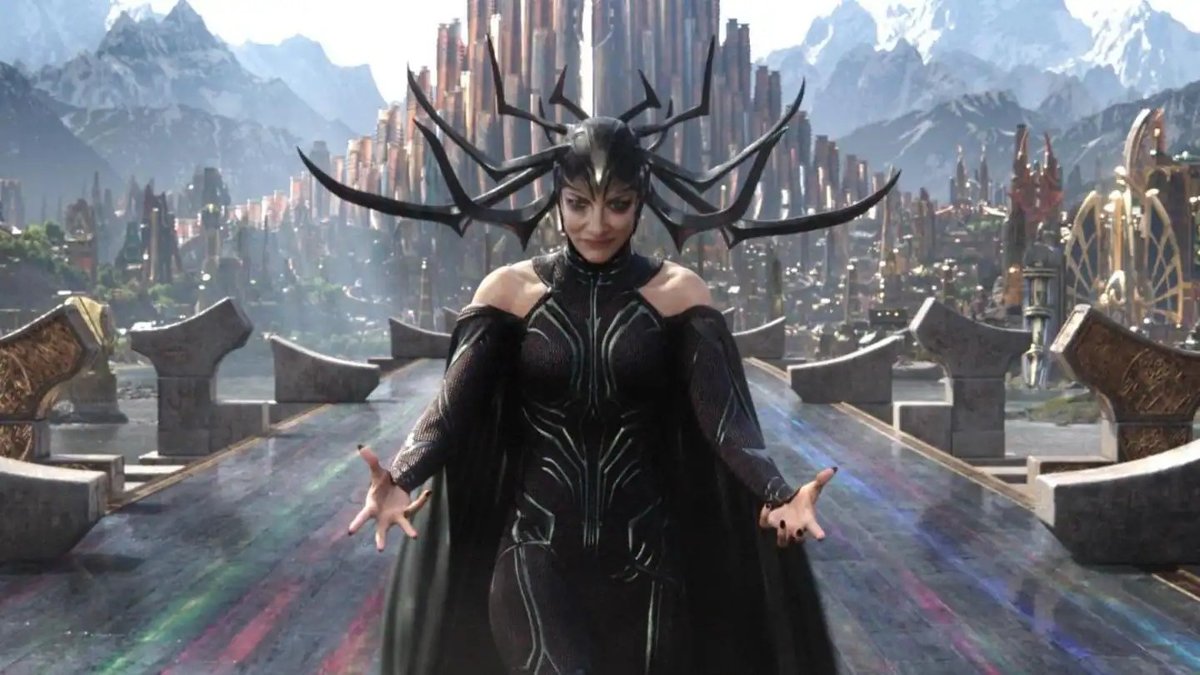
Hela, the Asgardian Goddess of Death, isn't merely another powerful antagonist in the vast Marvel pantheon; she's a force of nature, an embodiment of ancient power and forgotten conquest. Unraveling Hela's Powers, Abilities, and Visual Design offers a deep dive into what makes her one of the most compelling and terrifying villains to grace both comic pages and the silver screen. She's a character defined not just by her raw strength, but by a chillingly elegant presence and a power set deeply intertwined with the very fabric of life and death.
Understanding Hela isn't just about cataloging her formidable arsenal; it's about appreciating the meticulous craft behind her creation, from her dark magic to her iconic, menacing silhouette. This isn't a villain you simply defeat; she's a primal force you can only hope to contain.
At a Glance: The Goddess of Death's Defining Traits
- Superhuman Physiology: Possesses immense strength, durability, and regenerative capabilities far surpassing most Asgardians.
- Necromancy: Can control life and death, raising the dead, and draining vitality from living beings.
- Weapon Manifestation: Effortlessly conjures an array of blades, spikes, and other weaponry from her body or surrounding environment.
- Cosmic Energy Projection: Capable of unleashing destructive energy blasts and forming protective force fields.
- Asgardian Power Link: Her powers are intrinsically linked to Asgard itself, growing stronger the longer she is present on her home world.
- Master Combatant: Highly skilled in both armed and unarmed combat, with millennia of experience.
- Iconic Visuals: Instantly recognizable by her elaborate antlered crown, dark, regal armor, and flowing cape, projecting an aura of dread and dominance.
- Immortality: As a goddess, she is virtually ageless and immune to conventional diseases.
The Crown Jewel of Asgardian Villainy: Hela's Unmatched Presence
Before delving into the specifics, it's crucial to grasp the sheer magnitude of Hela's threat. She wasn't simply banished; she was erased from history, a deliberate act by Odin to conceal Asgard's bloody past. Her return signaled an apocalypse, not just for Asgard, but for any who dared to stand in her way. She embodies the unchecked ambition and martial might that built Asgard's empire, making her a dark reflection of its glorious façade.
Unlike many villains driven by revenge or conquest, Hela's motivations are simpler, more primal: she wants what she believes is hers—Asgard—and she intends to rule it with an iron fist, restoring its "true" legacy of dominion. This unwavering resolve, combined with her unparalleled might, makes her a genuinely terrifying antagonist.
Beyond Mortal Grasp: Decoding Hela's Formidable Powers & Abilities
Hela's power set is expansive and devastating, drawing heavily from both her lineage and her unique connection to the forces of life and death. Her abilities aren't just for show; they're designed for absolute domination.
Mystic Necromancy and Life Absorption
At the core of Hela's terrifying abilities is her mastery over necromancy—the manipulation of life and death. This isn't parlor tricks; it's a cosmic-level control over existence itself.
- Raising the Dead: Hela can resurrect the deceased, transforming fallen warriors into her undead army. She demonstrated this chillingly on Asgard, converting its valiant defenders into her skeletal thralls, a horrifying perversion of life itself. The sheer speed and scale with which she can do this is breathtaking, instantly turning battlefields into an unending nightmare for her foes.
- Life Draining: A particularly gruesome ability allows Hela to drain the life force from living beings with a touch, or even through her sheer presence. This not only weakens her opponents but also replenishes her own strength and vitality, making her a self-sustaining engine of destruction. The process is often depicted as swift and agonizing, leaving withered husks in its wake.
- Soul Manipulation: In some comic iterations, her powers extend to the direct manipulation of souls, allowing her to claim them for her realm of Hel or even bind them to her will. This aspect highlights the intricacies of Asgardian magic and its darker applications, far beyond the elemental control typically seen from other Asgardian sorcerers.
Weapon Manifestation and Master Combatant
Hela doesn't carry a singular iconic weapon like Thor's Mjolnir or Odin's Gungnir; she is the weapon. Her body is a conduit for lethal force.
- Projection of Blades and Spikes: From her body or even thin air, Hela can conjure an endless barrage of razor-sharp blades, daggers, and spikes. These projectiles are not only magically enhanced but can be precisely aimed and devastatingly potent. We've seen her manifest them with such speed and force that they effortlessly tear through spacecraft, Asgardian armor, and even Bifrost energy. This unique power means she is never truly disarmed.
- Superhuman Skill: Millennia of combat experience have honed Hela into an unparalleled fighter. She wields her manifested weapons with deadly precision and unmatched grace, seamlessly transitioning between melee and ranged attacks. Her combat style is fluid, brutal, and terrifyingly efficient, allowing her to easily dispatch multiple opponents simultaneously. She doesn't just fight; she executes.
- Mjolnir's Destroyer: Perhaps the most iconic demonstration of her raw power was the casual destruction of Mjolnir, Thor's legendary hammer, with a single squeeze of her hand. This act immediately established her as a threat on an entirely different scale, something even Odin's magic struggled to contain. It signaled that the old rules of Asgardian power no longer applied.
Superhuman Physiology & Immortality
As an Asgardian goddess, Hela possesses a physiology far superior to humans, even most of her divine brethren.
- Immense Strength: She exhibits strength levels that dwarf even Thor's, effortlessly overpowering him and the Warriors Three. She can lift immense weights, tear through reinforced materials, and deliver blows that shatter rock and bone. Her physical might is a direct extension of her divine nature.
- Durability and Regeneration: Hela is incredibly resilient to injury, capable of shrugging off attacks that would kill lesser beings. When damaged, she possesses a rapid regenerative healing factor, mending wounds almost instantly. This makes her incredibly difficult to defeat through conventional means.
- Speed and Reflexes: Her combat prowess is augmented by superhuman speed, agility, and reflexes, allowing her to dodge incoming attacks and move with blinding swiftness across the battlefield.
- Immortality and Agelessness: As a goddess, Hela is immune to the ravages of time, disease, and conventional poisons. She has existed for millennia, retaining her youthful vigor and menacing power throughout.
Cosmic Energy Manipulation
Beyond her necromancy and weapon-wielding, Hela also demonstrates a profound command over raw cosmic energy.
- Energy Blasts: She can project powerful blasts of dark energy from her hands, capable of devastating opponents and structures. These aren't just concussive forces; they often carry a corrupting or weakening effect on their targets, reflecting her domain over death.
- Force Field Generation: Hela can conjure impenetrable force fields to defend against incoming attacks. These fields have proven capable of withstanding the combined might of Asgardian weaponry and energy attacks, demonstrating her defensive capabilities are as formidable as her offensive ones. This level of power firmly places her among the highest echelons of cosmic power within the Marvel universe.
The Goddess of Death's True Form
It's vital to recognize that Hela's powers aren't merely intrinsic to her; they are deeply tied to Asgard itself. The longer she is present on Asgard, the stronger she becomes, drawing power directly from the land where she was born and banished. This explains her overwhelming might upon her return and her relative (though still formidable) weakness when initially arriving on Earth. Her power is a reflection of Asgard's past, and she draws sustenance from its very essence. This connection elevates her from a mere powerful individual to a fundamental force of the realm.
A Symbol of Dominance: Hela's Iconic Visual Design
Hela's power isn't just felt; it's seen. Her visual design is a masterclass in villain aesthetics, conveying her history, power, and menacing nature without uttering a single word. Every element, from her crown to her costume, screams "Goddess of Death."
The Antlered Crown: More Than Just an Accessory
Her most striking and recognizable feature is undoubtedly her elaborate, antlered headdress. This isn't just a stylish accessory; it's a statement.
- Norse Mythology Roots: The design draws clear inspiration from historical depictions of Valkyries and figures from Norse mythology's deep influence, often associated with death and the afterlife. It evokes a sense of ancient power and a connection to the realm of the dead.
- Symbol of Authority: The crown’s sheer size and intricate, almost skeletal design convey immediate authority and a chilling regality. It's a crown of conquest, not just inherited rule. It makes her appear taller, more imposing, and instantly marks her as a figure of immense, intimidating power.
- Extension of Her Powers: In the MCU, the crown isn't just decorative; it appears to be an organic extension of her ability to manifest weapons, sprouting from her head as she fully unleashes her power. This blurs the line between her form and her abilities, making her a truly unified force of destruction.
- Cate Blanchett's Interpretation: Cate Blanchetts Thor role as Hela brought this design to life with spectacular effect. The way the crown appeared and receded, coupled with her performance, made it feel like a living, breathing part of her identity, enhancing her gravitas and menace.
Regal Armor, Somber Hues
Hela's attire is a stark contrast to the vibrant, often gilded aesthetics of traditional Asgard.
- Black and Green Palette: Her primary colors—deep blacks and dark greens—are traditionally associated with death, decay, and power. This color scheme immediately sets her apart from the warm golds and blues of Odin's Asgard, visually cementing her as an opposing force. The metallic sheen on her armor, often described as 'ebony,' suggests an unbreakable, formidable presence.
- Form-Fitting Yet Dominant: Her suit is sleek and form-fitting, accentuating her powerful physique while also providing a sense of dark elegance. It combines the practical aspects of battle armor with the regal embellishments of a queen, creating a look that is both warrior and sovereign.
- Flowing Cape: A long, often tattered or flowing cape adds to her dramatic silhouette and menacing aura. It billows around her, giving her movements a theatrical, almost predatory grace. The cape often appears to be made of shadows or dark fabric, further emphasizing her connection to the underworld.
Elegance in Destruction: The Subtle Details
Beyond the broad strokes, smaller details in Hela's design reinforce her character.
- Gothic and Skeletal Motifs: Many elements of her armor and crown feature skeletal or gothic patterns, hinting at her dominion over death. These subtle touches are unsettling, suggesting a deep-seated connection to the macabre.
- Unsettling Beauty: There's a dark allure to Hela's appearance. She isn't simply monstrous; she possesses a cold, formidable beauty that makes her even more intimidating. This blend of elegance and dread is a crucial part of her appeal as a villain. She commands attention and respect, even as she instills terror.
Hela Across the Realms: Comics vs. MCU Portrayals
While the core essence of Hela remains consistent, her specific origins and power dynamics have evolved between her comic book iterations and her highly successful live-action debut in Thor: Ragnarok.
Comic Origins and Evolution
In the comics, Hela is the ruler of the realms of Hel and Niflheim, often depicted as the child of Loki and the giantess Angrboda (though her precise parentage has varied). She has long been a recurring antagonist for Thor, Odin, and other Asgardian heroes, often attempting to expand her dominion or claim more souls for her realms.
- Realm of Hel: Her powers are deeply tied to her control over Hel, allowing her to command the dead and manipulate various mystical forces associated with the afterlife. She is frequently seen making pacts with other cosmic entities, most notably Thanos, who harbored a morbid infatuation with the abstract entity of Death itself, which Hela sometimes represented or served.
- Relationship with Death: In some comic storylines, Hela has a more direct, albeit complex, relationship with the cosmic entity known as Death, often trying to appease or usurp her. This adds layers to her character, showing her ambition extends even beyond Asgard.
- Long-Standing Adversary: For decades, Hela has been one of Thor's most consistent and dangerous foes, a constant reminder of the inevitability of death and the darker side of Asgardian mythology. Her comic appearances often delve into philosophical questions of fate, mortality, and divine responsibility.
The MCU Reimagining
The Marvel Cinematic Universe (MCU) reimagined Hela as Odin's firstborn child and older sister to Thor and Loki. This familial connection fundamentally altered her backstory and her relationship with Asgard.
- Odin's Firstborn: This change made her a more personal and tragic villain for Thor, a forgotten piece of his family's history. It reframed her quest for domination not just as ambition, but as a claim to her birthright and a desire to restore what she saw as Asgard's true, more aggressive purpose.
- Source of Power: In the MCU, her power is explicitly linked to Asgard itself. When on Asgard, her power is virtually limitless, allowing her to manifest weapons, raise armies, and even destroy Mjolnir. This connection diminishes when she is away from Asgard, although she remains incredibly formidable. This subtle shift provides a clear narrative reason for her immediate overwhelming strength upon her return.
- Motivations: Her motivation became one of reclaiming a throne she believed was stolen and continuing the expansionist legacy her father abandoned. This made her a symbol of Asgard's hidden imperial past, a dark mirror to its perceived golden age. This adaptation made her more relatable (in her motivations, if not her methods) and gave her a deeper, more personal connection to the central heroes.
Common Misconceptions & Clarifications
Hela's unique nature often leads to misunderstandings about her true capabilities and identity.
- Is Hela the actual Cosmic Entity, Death? In the MCU, no, she is not. She is the Goddess of Death, but distinct from the abstract cosmic entity that Thanos is often obsessed with in the comics. In comic lore, her relationship with the entity Death has been more fluid, sometimes acting as its servant or avatar, but rarely being it directly. It’s crucial to understand the distinction between a god of a concept and the concept itself.
- Could Thor have beaten her alone without Surtur? Absolutely not, at least not in her fully empowered state on Asgard. The destruction of Mjolnir, the effortless defeat of the entire Asgardian army, and her near-invincibility demonstrated that even a fully powered Thor (without Stormbreaker or his "true" lightning powers fully unleashed) was no match for her. It took the literal destruction of Asgard by Surtur to truly defeat her. Her power scaling places her beyond most singular threats faced by other formidable Marvel villains and heroes.
- Is her power truly limitless? While immensely powerful, particularly on Asgard, "limitless" is a strong word. Her power has clear environmental dependencies in the MCU. Off-world, while still deadly, she's less overwhelming. Even in the comics, while she rules Hel, she has faced defeat and has limitations within the broader cosmic hierarchy. Her power is vast and ancient, but not omnipotent.
- Was she truly Odin's best child? From a purely martial and expansionist perspective, yes. Odin himself admitted he couldn't control her once her ambition was unleashed. She was the general who conquered the Nine Realms, proving her unparalleled tactical and destructive capabilities. Her methods were brutal, but undeniably effective.
Beyond the Battlefield: The Thematic Significance of Hela
Hela's character resonates far beyond her destructive capabilities. She serves as a powerful thematic device, challenging the very narrative of Asgardian glory.
- The Sins of the Past: Hela is the living embodiment of Asgard's brutal, forgotten past—an empire built on conquest and bloodshed, not just benevolence. Her return forces Thor and the audience to confront the uncomfortable truth behind Odin's reign and the "peace" he enforced. She is the bill coming due for centuries of hidden violence.
- Colonialism and Empire: Her story can be read as a commentary on the nature of colonialism and empire. She was the spearhead of Asgard's expansion, and her return represents the violent reckoning that often accompanies forgotten conquests. She doesn't just want a throne; she wants to resume the subjugation of worlds.
- Family Legacy: Hela’s familial relationship to Thor and Loki injects a layer of tragedy and psychological depth. She represents the dark legacy that every family, even divine ones, must confront. Her existence questions whether one can truly escape the shadows of their ancestry.
- The Inevitability of Death: As the Goddess of Death, Hela is a constant reminder that all things, even gods and realms, must eventually end. Her powers over necromancy and her very presence underscore this fundamental truth of existence, making her a primal force rather than just a conqueror.
Mastering the Lore: How to Deepen Your Understanding of Hela
Hela's story is complex, spanning decades of comic book history and a memorable cinematic interpretation. To truly appreciate her, consider exploring these avenues:
- Comic Book Deep Dives: Seek out key comic runs where Hela plays a central role. Early appearances in Journey into Mystery and Thor comics establish her character, while more modern runs delve into her psychological motivations and her connection to broader cosmic events. She’s often at her most powerful and terrifying when manipulating the balance of life and death across the Nine Realms.
- Revisiting Thor: Ragnarok: Watch Thor: Ragnarok with a keen eye on Hela's performance and the visual storytelling. Notice how her powers manifest, the subtle shifts in her demeanor, and how her design complements her actions. Pay attention to how the film portrays her connection to Asgard and the evolution of her power.
- Exploring Norse Mythology: While Marvel's Hela is a distinct character, her roots are firmly planted in Norse mythology. Understanding the myth of Hel, the realm of the dead, and the role of other death deities can provide a richer context for her character and powers. This groundwork helps in appreciating the creative liberties and adaptations Marvel undertook.
Hela is more than just a villain; she is a seismic event, a force that reshapes the narrative of Asgard itself. Her powers are a terrifying blend of ancient magic, physical might, and an indomitable will, all encapsulated within a design that is both regal and utterly terrifying. By understanding her formidable arsenal and iconic appearance, you gain a deeper appreciation for one of Marvel's most chilling and unforgettable antagonists.