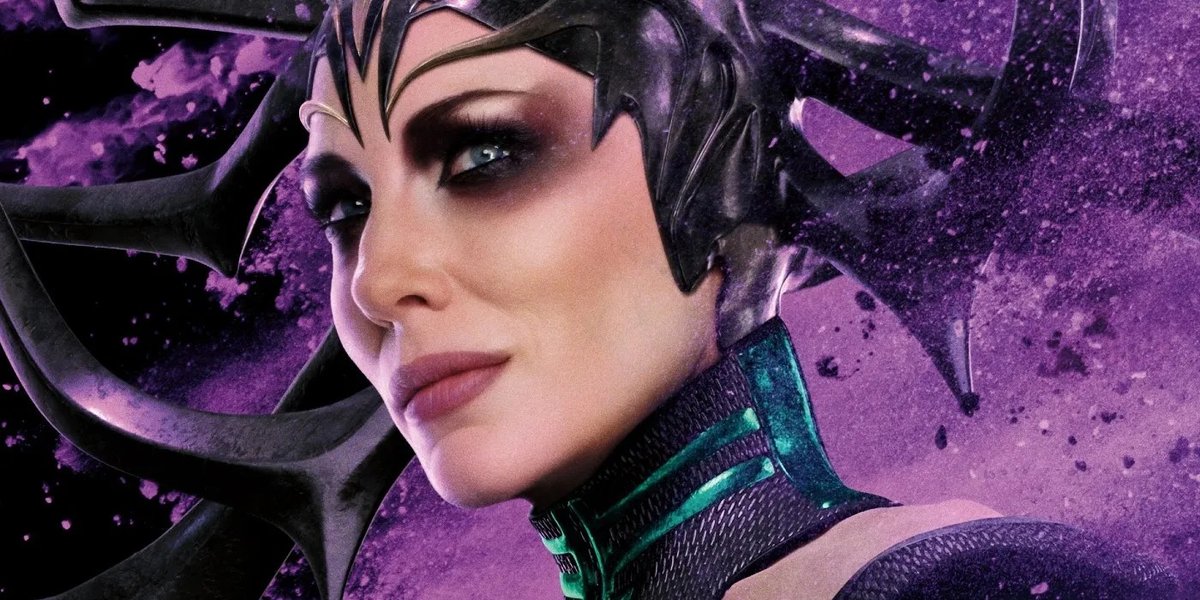
For decades, Hela, the imposing Goddess of Death, has commanded fear and respect across the Marvel Comics universe. Her name alone conjures images of dread and dominion over the departed. Yet, her actual lineage has been anything but static, shifting significantly from enigmatic origins to a clear, if often retconned, connection. Most recently, a seismic shift in Thor (2020) has cemented Hela as Loki's adoptive daughter, a stark departure from her beloved portrayal in the Marvel Cinematic Universe (MCU) where she reigned as Odin's firstborn. Understanding Hela's Origin and MCU Adaptation means navigating a fascinating, and sometimes convoluted, journey through comic book lore.
This latest retcon isn't just a minor tweak; it redefines a fundamental relationship within Asgardian mythology, linking two of its most powerful and troublesome figures in a profound new way. It offers a fresh lens through which to view both Hela and Loki, and begs the question of what impact this will have on the larger Marvel cosmos.
At a Glance: Hela's Shifting Origins
- Classic Comic Debut: First appeared in Journey Into Mystery #102 as the formidable Goddess of Death.
- Early Lineage: Originally, her parentage was unconfirmed, rooted in myth and mystery.
- Loki's Daughter (Initial Comic Confirmation): Thor & Hercules: Encyclopaedia Mythologica (2009) #1 identified her as the biological daughter of Loki and the frost giant Angerboda.
- Kieron Gillen's "Leah" Reboot: Briefly convoluted her past, hinting at self-creation or a new origin.
- MCU Adaptation: Portrayed as Odin's forgotten eldest child and Thor's sister in Thor: Ragnarok.
- Current Comic Retcon (Thor #34, 2020): Rescued as an infant "Death Stone" by Thor, she is rapidly aged and entrusted to a past Loki and Angerboda, making her Loki's adoptive daughter.
The Original Goddess of Death: Power Without Parentage
When Stan Lee and Jack Kirby first unleashed Hela in JOURNEY INTO MYSTERY (1952) #102, she wasn't just another villain; she was an embodiment of death itself. Her presence was immediate, her power undeniable. With enhanced strength, stamina, and a formidable grasp of dark magic, she could manipulate the dead, claim souls, and often stood as a terrifying, seemingly insurmountable foe for Thor.
For many years, the mystery surrounding her precise parentage only amplified her mystique. She was simply there, a force of nature, ruling over the realms of Hel and Niffleheim. This lack of a concrete origin allowed her character to exist as a pure archetype—the chilling personification of mortality, a natural counterpoint to Asgard's vibrant, often immortal, pantheon.
The First Loki Link: Aligning with Norse Mythology
While her comic debut left her origins vague, Marvel eventually looked to the rich tapestry of Norse mythology for inspiration. In these ancient sagas, Hela (or Hel) is traditionally described as the daughter of Loki and the giantess Angrboda. This relationship also gave her two infamous siblings: the monstrous Fenris wolf and the colossal Midgard Serpent (Jörmungandr).
Marvel Comics eventually formalized this connection. In 2009, THOR & HERCULES: ENCYCLOPAEDIA MYTHOLOGICA #1 explicitly identified Hela as the daughter of Loki and Angerboda, bringing her comic book lineage in line with her mythological roots. This established a foundational relationship that many fans came to accept, solidifying Hela's place not just as a cosmic entity, but as a member of Asgard's most notorious, albeit often estranged, family. It also added a layer of tragic irony to Loki’s character, making him the father to the very concept of death in some sense.
A Brief, Confusing Detour: Kieron Gillen's "Leah"
Comic book narratives are fluid, and origins can often be revisited to serve new storytelling goals. Kieron Gillen's run on Journey Into Mystery introduced a peculiar twist. Without directly retconning Hela's origin, Gillen introduced a storyline where Hela created a new, younger version of herself named Leah. This narrative thread playfully convoluted her past, leaving readers to ponder whether Hela had, in essence, rebooted her own history or if Leah was a fragment of her former self.
Some theorize this creative choice was a subtle nod, or even an early attempt to create narrative space, for the impending MCU adaptation. At the time, whispers of Hela being Odin's daughter in the films were circulating, and providing a slightly more ambiguous comic origin might have been a way to bridge the two interpretations, or at least prevent a direct contradiction that would confuse readers following both mediums.
The MCU's Bold Stroke: Hela, Firstborn of Odin
The Marvel Cinematic Universe has always taken liberties with comic book source material, adapting characters and storylines to fit its cohesive cinematic narrative. For Hela, this meant a radical, yet incredibly effective, reinterpretation. In 2017's Thor: Ragnarok, Hela was introduced not as Loki's daughter, but as Odin's firstborn and forgotten executioner, making her Thor's older sister.
This change had a profound impact. It gave Thor a direct, personal stake in combating her, transforming their conflict into a deeply familial and tragic struggle for the soul of Asgard. Portrayed with chilling grandeur by Cate Blanchett, Hela became an iconic MCU villain, her power and rage stemming from a perceived betrayal by her own father. This adaptation delivered a compelling narrative that explained the destruction of Asgard and perfectly aligned with the film's darker, more character-driven tone. While vastly different from her comic counterpart, the MCU's Hela resonated deeply with audiences, cementing her status as a top-tier villain.
The Latest Retcon: Thor Makes Hela Loki's Adoptive Daughter
Just when you thought Hela's origin story was settled (at least in the comics), Marvel threw another curveball. The ongoing Thor (2020) series, specifically the "Blood of the Fathers" arc in Thor #34, introduced a brand-new, monumental retcon that fundamentally reshapes Hela's lineage.
The story begins with a deep dive into Asgard's ancient past, revealing Thor's grandfather, Bor, attempting to forge a "Black Stone"—an Infinity Stone embodying death itself. This relic, however, was not an inert object but a living being: a baby, imbued with the very essence of death. This infant "Death Stone" quickly became a target for cosmic heavyweights like Doctor Doom and Thanos, both seeking to harness its devastating power.
Thanos, in a particularly chilling encounter with Bor in the past, intended to sacrifice this child to gain its immense powers and, in his typical fashion, eradicate humanity. Thankfully, Thor, investigating the mysterious disappearance of souls in his own time, journeyed to the past. Accompanied by his sister Laussa, he intervened, rescuing the baby from Thanos's clutches.
During their perilous journey back through time, the "Death Stone" baby rapidly aged. Thor, understanding the profound implications of her existence and refusing Bor's demand to reclaim her, made an audacious decision. Instead of returning her to her creators, he brought the now-aged child—unmistakably Hela—to Jotunheim. There, in a moment that rewrites history, Thor entrusted her to a past version of his brother, Loki, and his consort, the frost giant Angerboda.
This shocking turn of events effectively establishes Hela as Loki's adoptive daughter and trainee. Thor, by his actions, engineered the very origin story that Marvel had previously codified, albeit with a monumental twist. Hela isn't Loki's biological daughter in the traditional sense; she's a cosmic entity, a living Infinity Stone, whose formative years were shaped by the God of Mischief himself, thanks to Thor's intervention.
Why This Retcon Matters: Reshaping Asgardian Destinies
This latest origin story is more than just a clever plot device; it has profound implications for the entire Asgardian mythos and the wider Marvel universe:
- Loki's Paternal Role: By making Loki Hela's adoptive father and trainer, the retcon adds incredible depth to his character. It reframes his past, suggesting that his influence directly shaped one of the most formidable beings in the cosmos. Did his mischief nurture her dominion over death, or did his occasional glimpses of care temper her?
- Hela's Inherited Power: Hela's control over dead souls is no longer just a magical ability; it's intrinsic to her very being as a "Death Stone." This makes her not just a goddess who rules death, but effectively the living embodiment of death, with major ramifications for the fundamental concepts of life and mortality in the Marvel universe.
- Cosmic Consequences: The fact that Hela is essentially a living Infinity Stone means her existence isn't just an Asgardian problem. Her power and potential draw the attention of cosmic titans like Thanos and brilliant minds like Doctor Doom, immediately elevating her threat level and making her a linchpin in future cosmic narratives. Her actions could have far-reaching effects, directly impacting groups like the Avengers and X-Men who often deal with global or universal threats.
- Thor's Guilt and Responsibility: Thor’s decision to place Hela with Loki creates a unique burden. He is now directly responsible for her upbringing and, by extension, her destructive potential. This adds a powerful layer to their future conflicts, making them not just battles between hero and villain, but between a brother and the consequence of his own world-altering choice.
The Shifting Sands of Fate: Hela's Future
With this new origin, Hela’s path becomes more complex and perhaps, more hopeful. The retcon introduces fascinating possibilities:
- Potential for Redemption: The narrative suggests that Hela, as a being whose destiny was manipulated by others, might have the agency to forge her own future. Could her upbringing under Loki, however tumultuous, have instilled some semblance of twisted affection or a unique moral code? The comics have shown that even the most seemingly irredeemable characters, like Corvus Glaive, can be given second chances or find new purposes. This retcon opens the door for Hela to perhaps redefine her role, even if she remains a formidable force.
- Ongoing Threats: Her status as a "Death Stone" means she remains a prize. Doctor Doom has already captured the older Hela, undoubtedly with plans to exploit her power. Thanos, who initially sought to sacrifice her, will undoubtedly return, seeing her as the ultimate weapon he can wield. This ensures that Hela’s journey will be fraught with conflict and external manipulation, even as she tries to define herself.
- Narrative Flexibility: This origin provides writers with immense flexibility. They can explore Hela’s formative years under Loki, delve into the nature of her "Death Stone" power, and pit her against cosmic threats in entirely new ways. It enriches her character, moving her beyond a one-dimensional villain to a complex being with a tragic, engineered past.
Understanding the Ever-Evolving Narrative
The story of Hela's origin is a prime example of the dynamic nature of comic book storytelling. Characters, even long-established ones, can have their histories revised to serve new narrative directions, add deeper layers, or even to align more closely with contemporary themes. This fluid approach allows writers to keep characters fresh and relevant, exploring new facets of their personalities and powers.
Whether it's the classical mystery, the mythological alignment, the Gillen-era ambiguity, the cinematic reimagining, or the latest time-displaced origin, each version of Hela tells a slightly different story. Each iteration reflects the creative needs of its time, showcasing the ingenuity of creators adapting timeless archetypes for new audiences.
Navigating the Multiverse of Hela's Truths
Hela, in all her formidable glory, stands as a testament to the power of adaptation and retcon in serialized storytelling. From her enigmatic debut to her firm establishment as Loki's adoptive daughter in the comics, contrasting sharply with her MCU role as Odin's firstborn, her narrative is a rich tapestry of shifting identities and profound implications.
To truly understand Hela is to appreciate the multiplicity of her truths across different mediums and eras. She is a character of immense power, a mistress of death, and now, a living embodiment of one of the universe's most fundamental forces, with a destiny both burdened by her past and ripe with potential for a future of her own making. As the Marvel universe continues to expand and evolve, Hela's journey will undoubtedly remain one of its most compelling and consequential sagas.