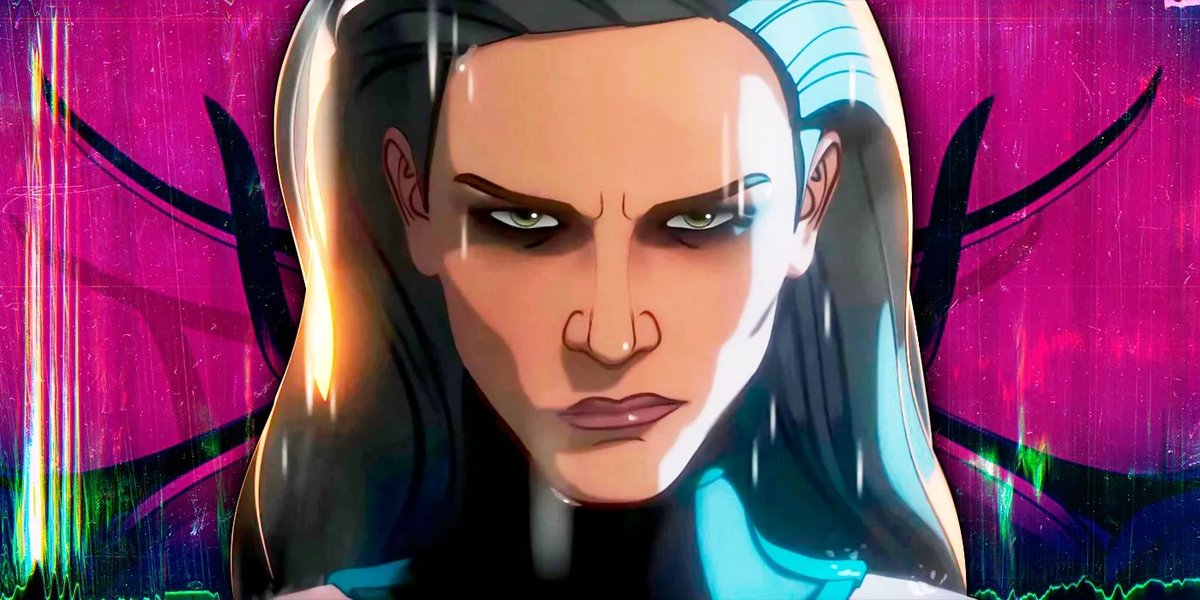
The initial rumble of the MCU's third Thor film, Ragnarok, promised a vibrant, comedic shake-up. What it delivered, however, was something far more profound: a complete dismantling of Asgardian mythology and a stark redefinition of its hero, all thanks to the terrifyingly charismatic Goddess of Death, Hela. Her arrival wasn't just another villain introduction; Hela's Impact on the MCU Narrative proved to be an earthquake, irrevocably altering not only Thor's arc but also the very fabric of how the MCU approached legacy, power, and genuine stakes.
Before Hela, Asgard was a shimmering, golden realm, a bastion of peace and cosmic grandeur. After her, it became a kingdom built on conquest and suppressed truths, forcing its heroes to confront a much darker history than they ever imagined.
At a Glance: Why Hela Still Matters
- Shattered Asgard's Myth: Exposed the violent, colonial past of Asgard, moving it beyond a mere "good guy" kingdom.
- Redefined Thor: Forced him to lose Mjolnir, his home, and his identity, pushing him towards true leadership and self-discovery.
- Elevated MCU Villains: Set a new standard for antagonists with deeply personal connections to the heroes and legitimate grievances.
- Catalyst for Change: Her actions directly led to Ragnarok, fundamentally shifting the status quo for Thor and the Asgardian people.
- Thematic Depth: Introduced complex themes of power, mortality, legacy, and the cost of empire that resonated deeply throughout the MCU.
Beyond the Standard Villain: Hela's Unprecedented Arrival
When Hela first graced the screen, her entrance wasn't just a dramatic reveal; it was a narrative grenade. We’d seen powerful villains before, sure, but Hela wasn’t simply an external threat to be overcome. She was an internal threat, a foundational secret bursting forth, a manifestation of Asgard’s suppressed past.
You see, for years, the MCU presented Asgard as a glorious, benevolent protector of the Nine Realms, led by the wise and mighty Odin. Hela's immediate presence shattered that illusion. She wasn't just a villain; she was Odin's firstborn, the true architect of Asgard's original conquests, banished and forgotten. This lineage immediately elevated her beyond a generic monster-of-the-week, anchoring her deeply in the hero's personal history and the kingdom's very identity. Her rage wasn't aimless; it was a direct, furious response to what she perceived as her stolen birthright and Odin's hypocrisy.
Her arrival didn't just pose a physical threat; it demanded a moral reckoning. It forced Thor, Loki, and indeed the audience, to re-evaluate everything they thought they knew about Asgard and Odin's hidden past. This wasn't a fight against an alien invader; it was a civil war with deep, traumatic roots, making the stakes feel profoundly personal and emotionally resonant in a way few MCU conflicts had before.
Shattering Asgard's Myth: The Dark Underbelly of a Golden Realm
Hela wasn't subtle about exposing Asgard's true origins. With a wave of her hand, she didn't just destroy the palace; she unveiled murals beneath the gold leaf, revealing a history of brutal conquest, bloodshed, and imperial expansion. This wasn't the "shining city on a hill" Odin had presented; it was a brutal empire that had simply traded its swords for diplomacy, burying its violent past under layers of propaganda.
This revelation was crucial for the MCU narrative. It dismantled the simplistic good-vs-evil dynamic that often characterized earlier films. By showing Asgard as having a complex, morally ambiguous history, Hela opened the door for richer storytelling. It wasn't just about saving Asgard; it was about acknowledging its complicity, its past wrongs. This moral complexity resonated deeply, forcing characters and viewers to grapple with the idea that even heroic figures and nations can have dark secrets.
The destruction of Asgard itself, known as Ragnarok, wasn't just a spectacle; it was a narrative necessity driven by Hela's existence. As she rampaged through the realm, seemingly invincible, the heroes were pushed to a desperate conclusion: Asgard, the place, could not be saved because its very foundation was tainted by the violence Hela embodied. This wasn't merely a defeat; it was a forced evolution, making the survival of the Asgardian people the true victory, not the preservation of a flawed homeland. This radical shift demonstrated Asgard's true power dynamics and its inherent fragility.
Thor's Metamorphosis: From Prince to King (of a People, Not a Place)
Perhaps Hela's most significant impact was on Thor himself. Her initial confrontation with him was brutal and immediate: she effortlessly shattered Mjolnir, his iconic hammer and a symbol of his worthiness and power. This wasn't just a cool visual effect; it was a profound stripping away of Thor's identity. Mjolnir was his anchor, his weapon, and his proof of being the "God of Thunder." Without it, he was forced to confront who he was without his most defining object.
Hela's relentless pursuit and her seemingly insurmountable power pushed Thor to his absolute limits. He lost his father, his hammer, his home, and nearly his brother. This crucible of loss and desperation forced him to unlock a deeper, innate power – his true lightning abilities, independent of Mjolnir. It was a pivotal moment, signaling his transition from a powerful warrior-prince reliant on external tools to a true leader harnessing his inherent capabilities.
This journey wasn't just about gaining new powers; it was about accepting responsibility for his people and letting go of the past. When he finally embraces the idea that "Asgard is not a place, it's a people," he completes his metamorphosis. Hela, by destroying his world, ultimately forged him into the king he was always meant to be – not a king of a glorious realm, but a king of a displaced, traumatized people. To truly understand the gravity of this transformation, you have to Explore Cate Blanchetts Thor and her commanding portrayal of the Goddess of Death, which made Thor's struggle feel utterly overwhelming.
Thematic Resonance: Power, Mortality, and Legacy
Hela isn't just a destructive force; she's a walking embodiment of several core themes that deepened the MCU's narrative complexity. As the "Goddess of Death," she naturally brings themes of mortality to the forefront, but her role extends far beyond that.
The source material, The Complex Legacy of Hela - Goddess of Death in Norse Mythology and Marvel's Thor, highlights how she "embodies themes of power, mortality, and the complexities of existence." In the MCU, Hela perfectly encapsulates unchecked power and the corrosive nature of ambition. Her reign with Odin in their conquering past demonstrates how easily power can corrupt, and how readily history can be whitewashed to serve a more palatable narrative. Her return serves as a potent reminder that actions have consequences, even generations later.
Her presence forced the Asgardians, and by extension the audience, to consider the true cost of empire and the legacy of violence. Is it ever truly possible to escape a dark past, or does it always return to demand its due? Hela argues the latter, a vengeful spirit demanding accountability. Her character made the deeper themes woven into Thor: Ragnarok far more mature and thought-provoking than many viewers expected from a superhero blockbuster. She was a mirror reflecting Asgard's true nature, ugly and beautiful simultaneously.
Setting a New Bar for MCU Antagonists
Before Hela, many MCU villains, while entertaining, often felt like distinct threats to be defeated. Hela changed that trajectory. She wasn't just an antagonist; she was an organic part of the narrative's core conflict, a direct consequence of the heroes' own history. This paradigm shift influenced subsequent MCU villains, demonstrating that the most compelling threats are often those intertwined with the hero's personal journey or the world's inherent flaws.
Consider villains like Killmonger in Black Panther, whose righteous anger stemmed from Wakanda's isolationist policies, or even Thanos, whose ideological conviction, while destructive, had a terrifying internal logic. These characters, much like Hela, weren't simply evil for evil's sake; they represented profound, often suppressed, grievances or extreme philosophies. Hela showed the MCU that giving villains a deeply personal connection to the hero or the world they inhabit, coupled with a compelling, if twisted, motive, elevates the entire story. She truly marked the evolution of compelling antagonists within the MCU, pushing beyond simple good-versus-evil narratives to explore complex moral ambiguities.
Common Questions About Hela's Narrative Role
Hela's complex character often prompts a variety of questions among fans and critics alike. Let's tackle some of the most frequently asked:
Was Hela Truly Evil, or a Product of Her Environment?
This is a fantastic question that speaks to the depth of her character. While her actions were undeniably destructive and brutal, Hela also presented herself as reclaiming what was rightfully hers. She was Odin's firstborn, his greatest weapon in his imperial conquests. When Odin's ambition shifted from conquest to peace, he imprisoned her. Her "evil" can be seen as a twisted form of loyalty to the Asgardian way of life as she knew it, mixed with understandable rage at her unjust banishment and the whitewashing of her contributions. She's less a cartoonishly evil villain and more a force of nature—a consequence of Asgard's violent past finally demanding its due.
Could Thor Have Saved Her or Redeemed Her?
Given Hela's deep-seated rage and her unwavering belief in Asgardian conquest, redemption seemed highly unlikely. Unlike Loki, who often vacillates between villainy and anti-heroism, Hela showed no signs of remorse or willingness to change her ways. Her power and conviction were absolute. Thor's ultimate decision to unleash Surtur and trigger Ragnarok wasn't about defeating Hela in combat (which seemed impossible); it was about destroying the very thing she was fighting for, thus neutralizing her claim and her power base. Her narrative purpose was not to be saved, but to be the catalyst for Asgard's necessary destruction and rebirth.
What's Her Connection to the Larger MCU Cosmology or Future Threats?
Hela's direct impact was largely contained within Thor: Ragnarok, leading to the destruction of Asgard and the refugee status of its people. However, her existence and abilities (as the Goddess of Death, ruler of Helheim in Norse mythology) do have intriguing implications for the broader MCU. While the MCU largely separated her from the comic book's broader cosmic death entities like Death itself, her immense power and connection to Asgard's past served as a reminder that the universe held forces far beyond human comprehension. Her story also paved the way for deeper explorations of mythical realms and ancient powers in subsequent films.
Why Didn't We See Her Earlier in the MCU?
From a narrative standpoint, Hela's sudden appearance was designed for maximum impact. Revealing her earlier would have diluted the shock and undermined the carefully constructed image of Odin's benevolent reign. Logistically, her character required a Thor who was ready for such a profound reckoning, a Thor who had already begun to question his place and power. Ragnarok provided that perfect storm, making her emergence devastatingly effective precisely because she was an unexpected, deep-seated secret.
Hela's Enduring Legacy: A Catalyst for Change
The echoes of Hela's actions resonate far beyond Thor: Ragnarok. Her destruction of Asgard forced its people into a new reality as refugees, directly influencing Thor's journey through Avengers: Infinity War and Endgame, where his grief and failure are palpable. The establishment of New Asgard on Earth, and Valkyrie's subsequent ascension to King, are direct consequences of Hela's initial assault.
Her narrative function wasn't just to be a powerful foe but to be the ultimate catalyst for Thor's evolution and the Asgardian people's fundamental transformation. She forced them to shed the illusion of a golden age and embrace a more humble, yet resilient, identity. This dramatic upheaval proved that the MCU was willing to take major risks, sacrificing beloved settings and challenging established character mythologies for the sake of deeper, more meaningful storytelling. This willingness to completely upend the status quo was a crucial lesson for Marvel's willingness to take greater narrative risks in later phases.
Moving Forward: What Hela Taught the MCU About Narrative Risk
Hela's impact on the MCU narrative wasn't just about one film; it was about demonstrating the power of a villain who is inextricably linked to the hero's core identity and the world they inhabit. She proved that audiences are ready for nuanced antagonists, for stories that dismantle cherished myths, and for heroes who must lose everything to truly find themselves.
Her legacy is a clear blueprint: confront your heroes with their deepest fears, force them to reckon with their pasts, and don't be afraid to burn down the old world to build something new. The MCU, in the wake of Hela, became bolder, more confident in challenging its own foundations, leading to richer, more complex character arcs and a narrative landscape that continues to surprise and engage. She taught us that sometimes, destruction isn't just an ending; it's the most powerful beginning.