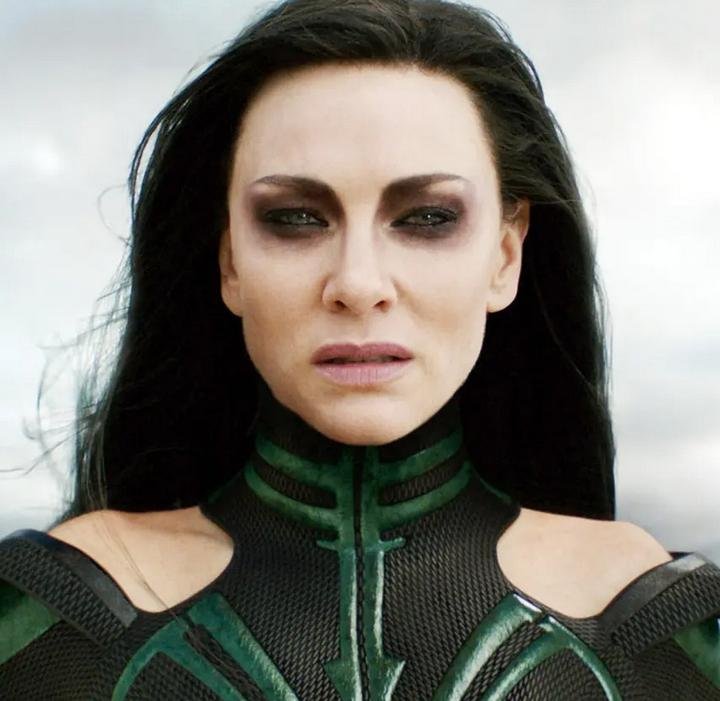
When you think of Marvel villains, a parade of larger-than-life figures likely springs to mind. But few have cut through the noise, the CGI, and the sheer volume of characters quite like Cate Blanchett's Hela in Thor: Ragnarok. Her arrival wasn't just another bad guy showing up; it was a seismic event that recalibrated our understanding of what a Marvel antagonist could be – a character imbued with a terrifying grace, a chilling intelligence, and a surprisingly human core of ambition and resentment. Blanchett didn't just play the Goddess of Death; she became her, elevating the role far beyond the typical comic book fare.
At a Glance: Hela's Reign of Terror and Blanchett's Triumph
- First of Her Kind: Hela was the Marvel Cinematic Universe's very first female main villain, shattering a long-standing male-dominated antagonist roster.
- Family Ties that Bind (and Break): She's not just a conqueror; she's Odin's firstborn and the older sister to Thor and Loki, bringing complex family drama to the forefront.
- Motivated by More than Malice: Director Taika Waititi emphasized her multidimensionality, describing her as troubled and even funny, a villain with compelling (if destructive) reasons.
- A Masterclass in Performance: Cate Blanchett infused Hela with a theatricality, a predatory physicality, and a captivating voice that commanded every scene.
- Potential Beyond Ragnarok: Her fate in Thor: Ragnarok left room for a return, particularly fueling speculation about her role in future Thanos storylines.
The Unveiling of Asgard's Dark Secret: A Sister's Wrath
Imagine a family secret so potent, so destructive, it had to be hidden for millennia. That's Hela. The moment Odin's life force dissipates, so too does the magical prison that held his eldest child, the original Executioner of Asgard, at bay. Cate Blanchett’s arrival on screen is less an entrance and more an explosion of raw power and repressed fury. She doesn't just walk out of the shadows; she practically tears her way through them, a force of nature unleashed.
Hela is introduced not as a whisper, but as a thunderclap. Her very presence instantly makes Thor and Loki, two of the MCU’s most formidable figures, seem like petulant children. She swats Mjolnir aside as if it were a pesky fly, a chilling demonstration of power that immediately establishes her as an existential threat. This wasn't just a villain with a plan; this was a being with a history, a legacy of bloodshed and conquest that predated Asgard's gilded age. Blanchett brings a chilling casualness to this initial display of might, a world-weariness mixed with simmering rage that makes you instantly understand the depth of her banishment and the scale of her ambition. She doesn't need to yell to be terrifying; a simple, dismissive glance is enough to send shivers down your spine.
Beyond the Stereotype: A Villain with Layers
What truly sets Hela apart, and what Blanchett so expertly brought to life, is her refusal to be a one-note antagonist. She's not just "evil for evil's sake." There's a clear, albeit warped, logic to her actions. Director Taika Waititi was instrumental in shaping this complexity, ensuring that Hela felt like a living, breathing character rather than a mere plot device. He described her as "multidimensional, layered, troubled, and funny," emphasizing that she wasn't a villain "without reason."
The Family Drama Twist
At her core, Hela’s story is a tragic family drama, a twisted reflection of the very dynamics that define Thor and Loki’s relationship. She is Odin's firstborn, his greatest warrior, and his instrument of conquest. It was Hela who marched alongside her father, leading the Einherjar to conquer the Nine Realms and establish Asgard's dominion. Her ambition, however, eventually outstripped Odin's desire for peace, leading to her banishment to Hel.
This backstory, while delivered through exposition, is made visceral by Blanchett’s performance. You see the resentment in her eyes, the feeling of betrayal for being cast aside by the very father she helped elevate. When she confronts Thor and Loki, there’s not just malice, but a palpable sense of superiority, of an older sister lecturing her naïve, less powerful siblings. She mocks their understanding of Asgard, dismissing their idyllic view as a childish fantasy built on her blood and sacrifice. This familial tension adds a profound depth to her character; she’s not just fighting against Asgard, she’s fighting for what she believes is hers by birthright and by conquest. It’s a compelling argument, however dark, that makes her more than just a cackling villain.
Motivation vs. Madness: A Conqueror's Logic
Hela's drive for mass destruction and world domination, while undeniably monstrous, isn't born of pure madness. It's rooted in a belief system, a brutal logic that sees the universe as something to be taken, not protected. She doesn't understand Odin's shift from conqueror to benevolent protector; to her, it's a weakness, a betrayal of their true Asgardian heritage. Her desire to rebuild Asgard into a glorious, terrifying empire is, in her mind, a return to its rightful destiny.
Blanchett embodies this conviction with unnerving clarity. Her Hela delivers pronouncements of conquest with the calm certainty of someone merely stating an undeniable truth. She genuinely believes she is restoring Asgard to its former glory, stripping away the "lies" that Odin imposed. This conviction, coupled with her immense power, makes her a truly formidable force, one that audience members can almost, terrifyingly, understand on a purely logical level, even while reviling her methods. She's a dark mirror reflecting Asgard's forgotten brutal past, a past that Thor and Loki are forced to confront head-on.
Crafting the Goddess of Death: Blanchett's Masterclass
Cate Blanchett is renowned for her versatility, disappearing into roles ranging from regal elves to struggling artists. Her portrayal of Hela is no exception; it’s a masterclass in physical acting, vocal performance, and sheer screen presence.
From Elven Queen to Goddess of Death: A Transformation
For an actress known for ethereal beauty and sophisticated gravitas (her turn as Galadriel in The Lord of the Rings saga, for instance), her transformation into the predatory, almost gothic Hela is astonishing. Blanchett embraced the role with an animalistic intensity. Her movements are fluid, almost dancer-like, yet carry the weight of immense power. She strides with purpose, her cape flowing like shadow, her hand gestures precise and menacing. There’s a theatricality to her, not in an over-the-top way, but in a deliberate, stage-trained manner that makes every gesture count.
Her voice, too, is a critical component of Hela's menace. Blanchett modulates it perfectly – sometimes a low, seductive purr, sometimes a venomous hiss, and occasionally, a booming roar of divine authority. She uses pauses, inflections, and subtle shifts in tone to convey contempt, amusement, and deadly seriousness, often all within a single sentence. This vocal control adds immeasurable depth to Hela, making her words as sharp and dangerous as her Necroswords.
The Look of a Conqueror: Beyond the Costume
While the visual effects and costume design for Hela are undeniably striking (her magnificent antlered helmet and flowing cape are iconic), it’s Blanchett’s embodiment of the character that makes them truly terrifying. She wears the power, the arrogance, and the ancient lineage in her posture and gaze. The predatory glint in her eyes, the sardonic twist of her lips, the way she surveys destruction with a detached amusement – these are all Blanchett’s contributions that breathe life into the CGI and fabric.
She projects an aura of invincibility, not just because of her powers, but because of her utter confidence in her own supremacy. You believe she has conquered worlds, not because the script tells you, but because the way she carries herself shows you. This fusion of exceptional acting with cutting-edge visual design creates one of Marvel's most aesthetically pleasing and viscerally threatening villains. To learn more about the incredible actress behind this performance, you might want to delve into All about Cate Blanchetts Thor.
Breaking the MCU Mold: Hela's Impact
Hela wasn't just another villain; she was a turning point for the MCU, particularly in how it handled its antagonists. Her impact resonated far beyond the confines of Thor: Ragnarok.
A New Standard for Marvel Villains
Before Hela, many Marvel villains, while visually impressive, often fell into familiar tropes. Their motivations could sometimes feel generic, their character arcs predictable. Hela broke this mold. As the first female main villain in the MCU, she carried the weight of expectation, and Blanchett, alongside Taika Waititi, delivered.
Her complexity, her genuine threat level, and the compelling family drama woven into her backstory set a new standard. She challenged the heroes not just physically, but emotionally and ideologically. Thor was forced to confront the dark history of his own family and kingdom, questioning everything he thought he knew. This level of personal and systemic challenge pushed the narrative forward in a way few previous villains had. Hela proved that Marvel could create villains who were not only powerful but deeply compelling, even sympathetic in their warped sense of justice. Her success paved the way for more nuanced antagonists in subsequent phases of the MCU.
The "What If?" Scenarios: Hela's Lingering Presence
Hela’s impact isn’t limited to Thor: Ragnarok. Her actions directly led to the destruction of Asgard (Ragnarok), a pivotal event that reshaped the cosmic landscape of the MCU and had ripple effects throughout subsequent films, including Avengers: Infinity War. Her presence lingers as a constant reminder of the stakes involved and the darker corners of Asgardian history.
Fans and critics alike often ponder "What if?" scenarios involving Hela. What if she had won? What if she had been redeemed? Her character is rich enough to sustain these hypothetical explorations, testament to the depth Blanchett brought to the role. She's not a villain easily forgotten or dismissed.
Behind the Scenes: The Director's Vision and Blanchett's Input
The magic of Hela didn't just happen; it was the result of a creative synergy between Taika Waititi’s unconventional vision and Cate Blanchett’s artistic prowess. Waititi, known for his unique blend of humor and heart, wanted a villain who wasn't just a force of evil, but someone with a distinct personality. He actively encouraged Blanchett to bring her own ideas to the character, fostering an environment of collaborative creation.
One delightful piece of behind-the-scenes trivia reveals Blanchett was encouraged to take on the role by her own Marvel fan children. This personal connection might have added an extra layer of enthusiasm and dedication to her performance, a desire to create a character that would genuinely impress her toughest critics at home. She fully embraced the physicality of the role, undergoing extensive training to perform many of her own stunts, which contributed to Hela's fearsome agility and commanding presence. This commitment from Blanchett, combined with Waititi’s direction to lean into the character’s layered nature – including her potential for dark humor – resulted in a villain that felt both terrifyingly real and uniquely entertaining.
The Power of the Performance: Why Hela Resonates
Why does Cate Blanchett's portrayal of Hela continue to captivate audiences years after her debut? It boils down to a few key elements:
- Charisma and Intimidation: Blanchett exudes a natural charisma that makes Hela impossible to ignore, even as she commits heinous acts. Her intimidation factor isn’t just about power; it’s about a deep, unwavering self-belief that is genuinely unnerving.
- Emotional Nuance: Despite being a villain, Blanchett injects Hela with subtle emotional beats – the flicker of disappointment when Thor fails to understand her, the pride in her past conquests, the barely contained fury of her banishment. These nuances prevent her from becoming a caricature.
- Theatricality with Substance: Her performance is grand and operatic, fitting the cosmic scale of Thor: Ragnarok, but it’s always grounded in a character with history and genuine motivation. It’s not performance for performance’s sake; it’s storytelling through every gesture and inflection.
- Empowerment of the Antagonist: Hela is powerful, intelligent, and utterly in control (until the very end). She’s not just reacting to the heroes; she’s driving the plot, forcing them to adapt and evolve. This agency makes her a truly formidable opponent.
In essence, Blanchett delivered a performance that transcended the often-limited scope of a comic book villain. She created a memorable, terrifying, and oddly compelling character that left an indelible mark on the MCU.
Hela's Lingering Shadow: Future Possibilities
While Hela seemingly meets her end in Thor: Ragnarok amidst the destruction of Asgard, the very nature of her powers as the Goddess of Death, coupled with comic book lore, has always left a tantalizing door ajar for her return. The MCU has a habit of bringing back fan-favorite characters, especially those with unresolved potential or cosmic ties.
One of the most persistent theories, hinted at by the ground truth, involves her potential connection to Thanos. In the comics, Thanos falls deeply in love with the physical embodiment of Death, a character often depicted as a cloaked female figure. Given Hela's title as the Goddess of Death and her formidable power, some speculated that she could replace this character in the MCU's adaptation of the Thanos storyline. This development would have pitted the Avengers against both Josh Brolin’s Thanos and Blanchett’s Hela in Infinity War, a truly terrifying prospect. While this particular plot thread didn't materialize in Infinity War or Endgame, the possibility of Hela’s return, perhaps in the multiverse or a different timeline, remains a popular discussion point among fans. Her connection to death itself provides a narrative loophole for reappearance, a constant "what if" that adds to her enduring legacy. After all, what truly kills the Goddess of Death?
Cate Blanchett's Hela didn't just conquer Asgard; she conquered our expectations for Marvel villains. Her portrayal remains a high watermark, a testament to the power of a phenomenal actress bringing multidimensional depth to a role that could have easily been one-dimensional. She reminded us that even in the most fantastical of realms, the most compelling stories are often about family, ambition, and the indelible marks left by history.